Email : seminyakdriver@gmail.com Phone +62082236087680 is official contact Seminyak Tour Driver Bali an affordable price for your private personal tour driver with English speaking and comfortable car Mini Van. We are ready to serve our services to be your driver, to assist you visiting Bali Island
Seminyak to Ubud is take us about 1 Hour and 30 Minutes drive where the existence is not far different from other markets available in the tourism area. Ubud Market as a society economics center of Ubud and it is apposite to the existence of Ubud Empire that is called Puri Saren. The market is unfolding from west to easterly divided become two group with different purpose. There are two markets available at the same area those are one block at the Westside is for a traditional artistic market and another block located in the east as an everyday traditional fundamental market requirement. Ubud Market is opened every day about at 08:00 until 18:00, even some from them still open until nighttime. While the traditional market for the fundamental requirement is opened everyday at 06:00 – even before that there is morning market started at 04:00 morning.
Ubud Market is a Center of Art Market in Bali
The art crafting are sold in this ubud art market consisted of various crafting, from traditional until contemporary crafting which its price is relatively cheap. You can do the transaction directly to the merchant which generally can be bargained. All the crafting sold in this place you can bring home as souvenir like slipper, wood idol, bag, clothes, matting, painting and a lot of more.
How to Locate Ubud Art Market?
It is very simple way and easily to find Ubud Market since it is very famous among the Balinese and it is strategically located in the center of Ubud Village. This market is located just in the front of Ubud Palace with crowded of visitor who purchases the items every day. Ubud Market is close to other places of interest in Ubud like Ubud Palace, Ubud Monkey Forest , Tegalalang Rice Terrace, Painting Museum and Gua Gajah. You can also join the Ubud Tour Package or other tour arrangements like Elephant Ubud Tour, Rafting Ubud Tour , Elephant Safari Ubud Tour and Ayung Rafting Ubud Tour .
Seminyak to Padang Padang Beach is take us about 1 Hour drive is located at Jalan Labuan Sait, in the village of Pecatu, Bali. Located not too far from the tourist area of Uluwatu. Arriving near the entrance of Uluwatu Travel, we take the road turn right. Follow the directions, to see that underneath the bridge looks the beach. Upon entering the area of Padang-Padang beach, we passed a temple. Interestingly, to get to this beach, we had to descend the stairs are made in the cliffs. After a few yards down the stairs we are greeted by the sun. It turns a dark alley behind the beach there is incredible beauty. The waves that roll, rock-breaking waves, and the sky is captivating. Towards dusk, we could see a beautiful sunset view, as if the sun is swallowed by the ocean.
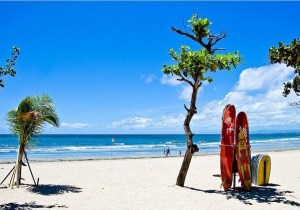
Bali Padang Padang Beach is one of the best beaches in Bali in addition to dreamland, Kuta and Nusa Dua. White sandy beach stretching ahead of you, clear blue water and flat, perfect for swimming. Sand white color contrasts with the black rocks and blue sea exotic. The beach was clean, quiet atmosphere and crystal clear waters will make us feel at home after a long time to swim and sunbathe here. The more the light rays of the sun adds to the more exotic blue waters are shown. A bright blue sky and white clouds forming harmonization beautiful scenery. Visible in the distance the boulder clusters, this is so beautiful. Large boulders are scattered along the coast.
Around the stretch of sand beach, you can find some tents that sell food and drinks, and renting surfboards. The extent of Kuta beach area is not, but this is what makes this beach so special. If you enjoy the sunset at the beach with a few other visitors around you it will feel like a private beach. The scenery was almost similar to the views of the beaches in Thailand. Although the standard has a secluded beach for a shore facility from the shower, toilet, as well as lifeguard or lifeguards.
Padang Padang beach is popular starting around 1996’s from the music group Michael Learns To Rock took this beach as one of the set of their video clips. Not long ago, actress Julia Roberts is also shooting at the beach for his new movie Eat, Pray and Love that has been released in 2010.
what to do :
beach hopping, surfing, snorkeling, sunbathing, massage, yoga, topless
Seminyak to Jimbaran Beach is take us about 45 Minutes drive is located between airport and bukit pecatu with original villages of kedonganan and Jimbaran itself. These2 traditional villages lay on a stretch of around 2 kilometers barrow lowland between Bali mainland and the foot of south Bali. Jimbaran and Kedonganan are under the administration of perbekelan Jimbaran or Desa Jimbaran, while desa jimbaran is under wide administrative area of Kecamatan Kuta. Jimbaran and kedonganan villages have been known as the biggest supplier of salted fish for whole Bali, and until now. Kedongan is still the first collection agent of fish dropping or fisherman boats from Muncar, East Java. This collection agent is collection K.U.D. Jimbaran or Jimbaran desa level co-operation. This co-operation consist of fisherman members of both village of jimbaran and kedonganan. If we come to to the beach of kedonganan in the morning around 09.00 am we can see dozen of fisherman boat anchor going on the beach with various fishes is being disembarking and dropped to the beach. Big number of fresh fish wholesalers come from various area of Bali have already queuing at the office of the co-operation to buy fish from K.U.D.
Jimbaran Bay Beach has both lovely beach and the most exotic seafood in Indonesia. Seafood cafes aligning on jimbaran beach next to intercontinental hotel are indeed exceptional. Situated within a peaceful fisherman village, these cafes started out as huts which eventually grew in to an established industry. Jimbaran Bay Beach was always just a small fishing village, but in the 1980’s developers moved in to exploit its glorious beaches. However it is still very much a fishing village and it is always pleasing to see when villagers have directly benefited from tourism. Jimbaran Bay Village, is the home to some of the best known international hotel names which straddle the bay and luxury villas are perched on the hillside with enviable views over the bay. The Jimbaran Bay Beach around the hotels are, as you would expect, stunning and it is a safe area for swimming. Around the village and fish market it is very much a working area for the fisherman tending their boats and nets and sorting their catch for market.
The Jimbaran Bay Beach takes on a whole new dimension as sunset approaches. They recently spread out to areas on the way to Ngurah Rai Airport. The flavor of their dishes is exquisite. Fresh seafood grilled on coconut charcoal served with flavorsome spices will undoubtedly stimulate you!! You can ick your favorite seafood prawns, lobsters, squids or fishes. Waiting on your food, you can sit around on soft white sands and watch the sunset in the evening. There are many restaurants come alive when they set up their candlelit tables down to the waters edge. The chefs fire up their outside kitchens and prepare their menus of seafood just as carloads of hungry mouths arrive to watch the sun setting whilst sipping cocktails before dinner.
Seminyak to Bloo Lagoon is take us about 1 Hour and 30 minutes drive and Bloo Lagoon Beach is located on the east side of Bali islands and it took us about 1.5 hours from Kuta just to drive there. But the beach was worth it – it was like a hidden paradise and become best places to visit for do snorkeling. Bloo Lagoon Beach is clean and water is quite sheer so it’s easy to see what’s underneath. Another good thing, there are not many people there
Bloo Lagoon Beach located approximately one hour and a half from Denpasar International Airport, Padangbai is a busy port where most people take the ferry to/from Lombok and onwards to the Gilis, Komodo Islands and Flores. With its beautiful setting, small, unspoiled village feel, it must qualify as one of the most attractive port towns in the world. At the northern end of the town sits the eleventh century Pura Silayukti Temple and just beyond it lies the Blue Lagoon, a small white sand beach great for snorkeling, diving and relaxing in the local warungs.
Blue Lagoon Beach is close to Padangbai harbour. Known as an underwater paradise, the water is warm and the marine life is abundant. You may well see clouds of ultraviolet fish daubed with splashes of luminous orange, followed by shoals of black fish with tails shaped like the head of a spanner, you might even see a fish in a leopard-print coat, and if you look carefully, you will notice cleverly camouflaged creatures hiding in the reef crevices. The coastline borders a coral garden where you can snorkel among psychedelic fish. Padangbai is a major harbour for ferries to Lombok as well as for smaller boats to Nusa Penida. It is a very picturesque village, with semi-circular hills surrounding a sparkling blue bay. It is also home to a famous temple, Pura Silayukti, where the Buddhist sage Mpu Kuturan is said to have lived in the 11th century.
Bloo Lagoon Beach is a great beach for snorkeling. The coral reef is right up to the shore and is very pretty. Best way is to enter on the far left side, where there is a coral-less canal that leads to the snorkling site. There are two restaurants with reasonable food, showers, chairs and snorkeling gear. The beach is easily accessible. To reach Blue Lagoon Beach, head east on foot over the prominent headland at the eastern end of the main bay. Follow the signs that say Blue Lagoon. Note that wading through the water can be both frustrating and dangerous due to an abundance of coral and submerged rocks.
There is good snorkeling in the bay, though the snorkeling at the Bloo Lagoon or White Sand Beach is much better. Beware of the current and remember basic safety rules, such as never to snorkel alone and not to swim to far off in a place that you do not know.
Several small shops in the main street of Padang Bai rent snorkeling equipment. They can also organise traditional jukung boats to bring you to the best spots and greatly increase your safety.
On a calm day expect lots of fish and great visibility.
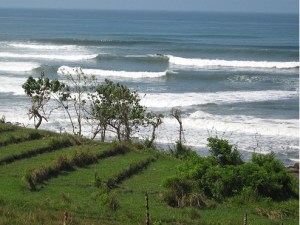
Seminyak to Dream Land beach is take us about 1 Hour and 20 Minutes drive , Dreamland Beach is one of the most beautiful beaches in Bali than Kuta beach. This beach is located in the area Pecatu, a region in the south of Bali. This become the most places to visit for surfing activity. This beach is located in the area Pecatu, a region in the south of Bali. The beach is located not far from the Uluwatu in Bali is very famous for its beauty. The beauty and cleanliness of the beach add to the attraction of visitors, not only from domestic but also foreign tourists.
Dreamland Beach was in the village of Pecatu, Badung regency, located in the southern island of Bali. You can reach this beach is about 30 minutes from Kuta Beach at Jimbaran. The beach is still beautiful and natural is located at the southern tip of South Badung. You’ll find this beach on the way to the famous temple in Bali, Pura Uluwatu.
Dreamland Beach is a beautiful beach with white sand stretch 100 meters and leaned on a steep of white stone cliff overlooking to the amazing view of Indian Ocean. This beach is very attractive for tourist including the surfers offering the elegant, tranquility and spectacular sunset view that create the romantic nuance that make it as one of the place many visited by tourist every day. Dreamland Beach is located in strategic area of Pecatu Graha, the huge area of luxurious residences, hotels, villas, world-class golf course (New Kuta Golf), water fun game and more that finally make this beach is increasingly popular. The advantages of this beach are big and powerful wave that make it as one of the most demanded surfing points in Bali Island by the experience until professional surfers. You will be very easy to locate the public facilities at this surfing point like restaurant and accommodations. This beach is also suitable for family holidays where you can do relax at the beach while enjoying the warm tropical atmosphere.
Seminyak to Lovina Beach is take us about 3 Hours drive, Lovina Beach is one of the famous tourist places in north part of Bali which own beautiful of calm sea water, blackish chromatic sand and the sea with its dolphin. One of the favorite in Lovina is watching dolphin and the most of local boat captain will offer same price as 150.000 IDR for one person for a boat trip to see the Dolphin
Lovina Beach it is one of the famous tourist places in north part of Bali which own beautiful of calm sea water, blackish chromatic sand and the sea with its dolphin. One of the favorite fascinations in Lovina is dolphin watching tour. Hundreds of dolphins can be seen in the morning time around 1 km offshore. We can see the dolphin attractions in this place like jumping. The famous tour to visit this beach for see the dolphin is the Bali Dolphin Tour. It is not fail to draw if the tourist has the time to see the sunset here. Lovina area is also supported by the number of tourism fascination which is can be reached from this location. Places of interests around Lovina are Hot Water Banjar, Wihara Budha (Buddies shrine), Gigit Waterfall and some countryside exist around the location.
Location Lovina Beach :
Lovina Beach is officially located in Kalibukbuk area and covering some countryside like Pemaron, Tukad Mungga, Anturan and Kalibukbuk countryside. Kalibugbug countryside it self is located in Buleleng sub district, meanwhile the Kaliasem and Temukus countryside are located in Banjar sub district where it both of them are belong to Buleleng regency. The eastern countryside is called Pemaron about 5 Km west of Singaraja, and the western countryside is Temukus about 12 Km west of Singaraja.
Lovina Beach is a Tourist Destination in Bali
The centre of activities in Lovina area is located 10 Km from Singaraja town. Nowadays, Lovina area is becoming the center of tourism activities in north part of Bali and offer many kind of accommodations, restaurants, bars, beach activities, art shops, bank, transportations etc. The accommodations in this area are a available from the star hotel class until small hotel even the home stay for the low budget travelers. As a tourist area and center of tourism in Singaraja, Lovina get the biggest visit from tourist who visiting north part of Bali . It is estimated by 90% from tourist who pay a visit to north part of Bali will in Lovina.
History Of Lovina Beach :
There are no clear sources or evidence hit the name of Lovina genesis. Pursuant to the reference of the children from Anak Agung Panji Tisna, the clan of famous Buleleng King that the name of Lovina is given by him which is located in Kaliasem countryside, where at the first time he build a bungalow as a resort. He said that the name of Lovina is taken away from a name of small hotel in India that is lafeina whereabouts he stayed and write the book with the title of Ni Ketut Widhi. In memory of the hotel name, hence the ownership lands give the Lovina name. But there is also other version that is Lovina Name is given caused by its 2 Santen trees are planted by him and grow embracing each other. In this case Lovina is coming from Latin Language that mean is loving each other or love. Then Lovina’s name is interpreted as abbreviation from Love and Ina and it is interpreted as Love to Indonesia .
Tourism Comes to Bali
Many date the advent of modern tourism in Bali with the opening of the Hotel Bali Beachin 1963. Taking the lead from that “sky scraping” structure, small hotels, inns and restaurants soon began to take root across the Island. In 1970, Bali’s new Ngurah Rai Airport began formal operations. Sensing opportunities afoot, the provincial government of Buleleng took early seminal steps to obtain its share or Bali’s tourist market.
After disappearing from popular usage for nearly a decade, the name of “Lovina” to designate the sub-districts of Buleleng and Banjar came back into vogues in the 1990s. Lovina today includes the beaches at Binaria, Banyualit, Kubu Gembong, Hepi, Rukad Cebol, Temukus and Penimbangan. The simple dream of Panji Tisna in the 1950s to create an attractive international tourism beach destination in North Bali lives on today as Lovina continues to welcomes thousands of visitors each year
Seminyak to Soka Beach is take us about 2 Hours drive , Soka beach has been known since long ago, as it is passed by travelers during their travel from Denpasar-Gilimanuk or vice versa. The site has a very beautiful scenery and best beach to visit in west Bali islands
Soka beach drive it has been known since long ago, as it is passed by travelers during their travel from Denpasar-Gilimanuk or vice versa. The site has a very beautiful scenery. The west part bounded by hills which is a part of Mount Batukaru in the north. While in the south is Indian ocean where Banyuwangi in Java is faintly visible from Soka. Vast rice fields and lush coconut groves enhance the beautiful scenery. Moreover, later when the sun is about to set, the view on top of Pura Luhur Serijong is comparable to the view in Tanah Lot.
Pura Luhur Serijong, built almost in the same period with the Rambut Siwi Temple in Jembarana and Pura Tanah Lot, on the sixteenth century AD by Rauh Bawu Sakti, and all of them have the same status. Pura Luhur Serijong is a place of worship (disungsung) particular by all Hindu followers in the Selemadeg and Pupuan subdistrict, and by those from Tabanan regency in general, mainly by Subak, because this temple is regarded as the source of food (welfare).
Until now the history of Soka Beach is still unknown, but according to local and the surrounding residents, travellers headed to west Bali and vice versa were always pass through this beach.
Soka beach is located in a quiet village of Selemadeg District, 45 kilometers from Denpasar and 84 kilometers from Gilimanuk, along the Java-Bali main road. No wonder countless vehicle passes the area everyday.
Next to the east coast of Soka there is a cave on a rock cliff, called cave Bulung Daya as many swiftlet live in this cave. On the west coast stretching along the palm garden, an accomodation service “Balian Beach Bungalow” and the Balian river is one of the best rafting spot in Bali.
Near to the Soka beach, a large parking lot is available. There are also few places for visitors to eat, drink, and shop for local snacks while resting before continue departing on their journey. On religious holidays and full moon (Purnama), the beach is crowded with visitors and Hindu followers who are conducting religious ceremonies.
For those who enjoy fishing the sea, they can join the local fishermen while they are sailing to the sea, using traditional boats using outboard engines or sails.
Soka Beach is located 40 km from Denpasar or 25 km west of the city of Tabanan, right on the Denpasar-Gilimanuk road section. Soka Beach has beautiful scenery and is great for a place to rest or stop over. On this beach lies a large pot of rock and an old kitchen belongs to Kebo Iwa as mentioned in the popular local legend.
Seminyak to Kuta Beach is take us about 10 minutes drive included traffic on busy main town seminyak , Kuta Beach is located near Bali’s Ngurah Rai Airport, only 15 minutes’ drive by car from the airport. It is the most famous beach resort on the island. Kuta Beach is the bustling area with the most tourists
Kuta Beach Bali is located near Bali’s Ngurah Rai Airport, only 15 minutes’ drive by car from the airport. It is the most famous beach resort on the island. Kuta Beach is the bustling area with the most tourists in all over Bali. In the past, it was only a very small village. Nowadays, it has developed into a prosperous tourist resort. On the beach, there are many peddlers along the street, selling various local specialties, such as crafts, T-shirts, beach clothes and accessories. As the beach is windy with high waves, it is not suitable for boating or swimming there. But it is an ideal place for wind surfing, which is favored by the young who look for excitement. It is also an ideal place for watching the beautiful sunset. At night, there are local Balinese singing and dancing, performing especially for tourists.
Kuta Beach is just like a holiday paradise with beautiful clean beach, numerous shops, bars, restaurants and shopping centers. Kuta Beach is not only a unique scenic spot for sun bathing and water activities, but also a perfect place for watching sunset. The commercial area in the center of Kuta Square is a new and modern shopping skyscraper.
Kuta Beach History
Since the 18th century Kuta has served as the entry for foreigners visiting southern Bali. In the 1830s Kuta was a thriving slave market, attracting a wide variety of international ‘lowlifes’. Since its rediscovery by hippies and surfers in the 1960s, Kuta and Legian have expanded so rapidly that the district is now one of the busiest tourist areas in the world. At three hundred year ago, in this place had been built a Konco (Buddhist Temple) located beside of Tukad Mati ( Dead River) where it river can be navigable at that time. The boat steps into the hinterland of Kuta, so that Kuta is a port trade. Mad Lange is a merchant from Denmark in 19 century had built its trade station in the river periphery. During living in Bali, he often becomes the medium between king of Bali and Dutch. Mad Lange has mysteriously died and his grave is located inside of Konco ( Buddhist Temple ) right in the river periphery. Kuta is quiet fisherman countryside in the past, but now it has been turned into the hilarious town and it is completed by post office, police office, market, pharmacy, photo center, and shop. There are a lot of hotels which are designed luxury and comfortable set in a long side of white sandy beach of Kuta .
Kuta Beach Night Life
Party central, Kuta at night refers to the area extending about 7km north of the original village of Kuta. This area now includes Legian, Seminyak and even Basangkasa. The Kuta area is the epicenter of Balis nightlife. The majority of Bali’s better entertainment places offer anything and everything a ‘night owl’ would want. Located at the center of the original village are Kuta’s many open-air pubs and discos.
Entrance to bars is usually free with special drinks promotions and Happy Hours from 6pm to 9pm, and sometimes even longer. Jalan Legian and Jalan Padma have the biggest concentration of watering holes. Take up the option of joining surfers to guzzle beer, play pool and watch surfing videos at Tubes Cafe. Or drop by the eye-catching and uniquely sailship-shaped Bounty Restaurant I, which sways to the music of its dance floor till dawn. Other happening outlets in town are the trendy 66 Club (but say ‘double six’) and hyper chic Gado Gado. For Kuta’s magnetic live music, The Maccaroni Club is irresistible.
One of Bali’s latest and most extraordinary; this place jazzes it up every Sunday from 10.30pm and invites guests to jam along on Friday nights. For a rare and special combination of Balinese dancing and rock bands near the beach, head straight for the Zero Six in Tuban while the new Hard Rock Cafe draws the crowds with live music and pricey drinks. Other live music spots include the Aussie-style ‘pubs’ along Jalan Melasti and the semi-submerged Joni Sunken Bar Restaurant. Classier up-market hotels like the Bali Padma Hotel on Legian beach offer more relaxed entertainment.
Seminyak to Batuan Village is take us about 1 Hour drive direct journey , Batuan village a famous Balinese Artwork / Balinese paintings and as such a famous Bali tourism destinations for Fine Art, located about 7 kilometers north of Denpasar about and 10 kilometers south of Ubud
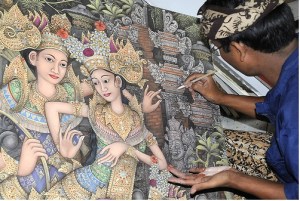
Batuan Village is a famous Balinese Artwork / Balinese paintings and as such a famous Bali tourism destinations, located about 7 kilometers north of Denpasar about and 10 kilometers south of Ubud, it is popular with center of Bali arts, and now it’s known for its dancing, wood panel carving and Bali paintings ubud. We have lots of tours to Batuan and Ubud painters – where you’ll see the beautiful paintings and they have Bali paintings for sale too.
Balinese traditional painting
was restricted to ceremony aspect such as religious part, calendar and leather puppet (balinese: wayang). This periode was before 1920 and called as Kamasan orWayang Style. Wayang itself is two dimentional drawing that characterized an hindu-buddhism epic such as Mahabarata and Ramayana. The paintings were used on temple or palace as ornament. They ilustrated many stories about religion and bali life. Ussually it is a pieces of paintings that tell a stories. The name of kamasan style itself was take from the village name where it originated. The material used in kamasan style is also traditional material from mineral and vegetables or plant resources. Also they use white bone, soot, or stone. Bamboo used as tool to painting and the media ( canvas ) ussually traditional canvas from wood, tree leaf, or cloth. In 1920, there are western artist visited bali. This has change the rule on balinese art painting. An introduce of new canvas from western material, inks and paint, has change the style into modern art painting. The year has start a new way of balinese modern art painting. More artists come to bali has influence traditional style that was restricted to ceremony aspect.
Batuan village wasn’t influenced by the western as they were in Ubud. The Batuan paintings were often dark, crowded representations of either legendary scenes or themes from daily life, freakish animal monsters, and witches accosted people. The Batuan Village paintings were gradations of black to white ink washes laid over most of the surface, so as to create an atmosphere of darkness and gloom. In the later years, the designs covered the entire space, which often contributed to the crowded nature of these Balinese paintings.
The Batuan Village artisans
Are known for their Balinese Artwork. Leading artists of the 1930s members of leading Brahman families, including Ida Bagus Made Togog, I Dewa Nyoman Mura (1877-1950) and I Dewa Putu Kebes (1874-1962), which were traditional Wayang-style Balinese painters for temples’ ceremonial textiles.
Story Of Batuan Village Painting Art
For over a thousand years Batuan has been a village of Balinese Artwork and Bali handicrafts. Batuan village has a thousand year old history in accordance with the recorded history – begins in A.D. 1022, with an inscription that is housed in the main village temple, Pura Desa Batuan/Batuan Village Temple. In the Age of Warmadewa Dynasty in Bali, Desa Batuan / Batuan Village had to be there. Batuan village eventually came to be called Batuan, from the word of Batu / Rock, because – in that time – in this region is a rocky area (the famous Balinese sand stones are still produced here in northern of Batuan), then because of daily changes in the pronunciation then more popularly known as Batuan Village.
Seminyak to Tohpati Village is take us about 1 Hour drive , and Tohpati Village is just about 12 kilometers from Kuta, and famous for Bali’s Batik Wand Weaving Center. Batik is a traditional form of painting fabric. is popluar place to enjoy visiting Batik art with different color
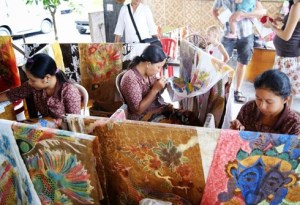
Toh Pati Village is just about 12 kilometers from Kuta, and famous for Bali’s Batik Wand Weaving Center. Batik is a traditional form of painting fabric. They painstakingly use dots and lines from wax to decorate the cloth. It is very impressive to watch. It would be impossible to visit or live in Indonesia and not be exposed to one of the country’s most highly developed art forms, batik.
Tohpati Village is a batik home industry, you will undoubtedly experience an overwhelming stimulation of the senses – due to the many colors, patterns and the actual smell of batik. Only through repeated visits and a bit of study will the types of designs and their origins become apparent.
History Batik :
Evidence of early examples of batik have been found in the Far East, Middle East, Central Asia and India from over 2000 years ago. It is conceivable that these areas developed independently, without the influence from trade or cultural exchanges. However, it is more likely that the craft spread from Asia to the islands of the Malay Archipelago and west to the Middle East through the caravan route. Batik was practised in China as early as the Sui Dynasty (AD 581-618). These were silk batiks and these have also been discovered in Nara, Japan in the form of screens and ascribed to the Nara period (AD 710-794). It is probable that these were made by Chinese artists. They are decorated with trees, animals, flute players, hunting scenes and stylised mountains.
No evidence of very old cotton batiks have been found in India but frescoes in the Ajunta caves depict head wraps and garments which could well have been batiks. In Java and Bali temple ruins contain figures whose garments are patterned in a manner suggestive of batik. By 1677 there is evidence of a considerable export trade, mostly on silk from China to Java, Sumatra, Persia and Hindustan. In Egypt linen and occasionally woollen fabrics have been excavated bearing white patterns on a blue ground and are the oldest known and date from the 5th century A.D. They were made in Egypt, possibly Syria. In central Africa resist dyeing using cassava and rice paste has existed for centuries in the Yoruba tribe of Southern Nigeria and Senegal.
Indonesia, most particularly the island of Java, is the area where batik has reached the greatest peak of accomplishment. The Dutch brought Indonesian craftsmen to teach the craft to Dutch warders in several factories in Holland from 1835. The Swiss produced imitation batik in the early 1940s. A wax block form of printing was developed in Java using a cap.
By the early 1900s the Germans had developed mass production of batiks. There are many examples of this form of batik as well as hand-produced work in many parts of the world today. Computerisation of batik techniques is a very recent development.




 Seminyak Tour Driver Bali - Authorized and Registered at Royal Bali Tourism Industry